
Recover unsaved PowerPoint file with complete 2026 guide, including free recovery tips, advanced methods and professional tools.
1. Introduction
1.1 Common Causes of Unsaved PowerPoint Files
In general, PowerPoint presentations are not saved for the following reasons:
- Accidental closure without saving—clicked Don’t Save by mistake
- System crash, freeze, power outage, or unexpected shutdown
- Windows Update forcing PowerPoint to close mid-session
- PowerPoint application crash or freeze
- OneDrive sync conflicts overwriting or reverting file versions
1.2 Two Key Scenarios This Guide Covers
- Scenario A: A brand-new file that was never saved to disk
- Scenario B: An existing file with unsaved changes lost due to a crash, freeze, accidental closure, or overwrite
2. Before You Start: Immediate Actions
2.1 Stop Writing to the Drive Where the File Was Stored
As soon as you realize a PowerPoint presentation is unsaved, stop all activities on the drive where it was stored. Every file you create, download, or install risks overwriting the temporary data or disk sectors that could be used for recovery. Do not install recovery software to the same drive you are recovering from.
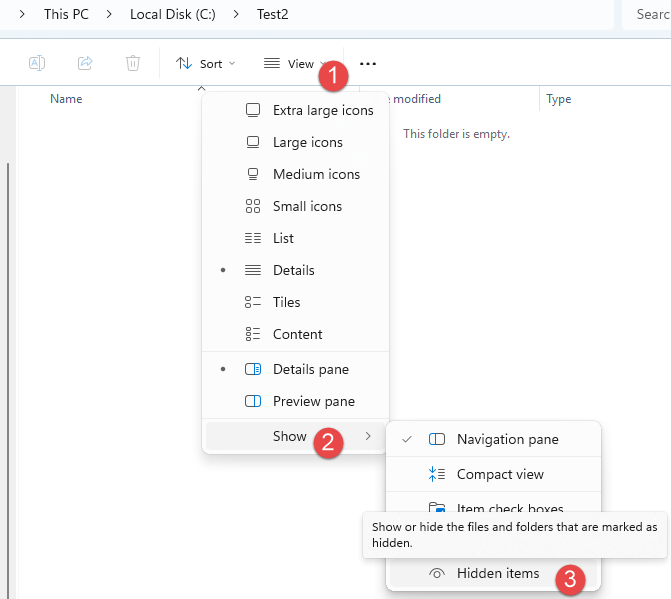
2.2 Enable Hidden Files and Folders in File Explorer
AutoRecover and temporary files are hidden or reside in hidden system folders. Make them visible before searching and recovering.
Windows 10: Open File Explorer, click View, and check Hidden items.
Windows 11: Open File Explorer, click View -> Show -> Hidden items.
3. Method 1: Use the Yellow Message Bar
Each time PowerPoint starts, it automatically scans for AutoRecover files from the previous session and opens them. This is the fastest way to restore an unsaved PowerPoint file after a crash.
- Reopen PowerPoint after the crash or unexpected closure.
- PowerPoint opens all recovered presentations automatically, each in its own window.
- Each recovered presentation displays a yellow message bar at the top:
RECOVERED UNSAVED FILE — This is a recovered file that is temporarily stored on your computer. - Click Save in the yellow bar immediately.
- Use File -> Save As to save the file to a permanent location with a proper name.
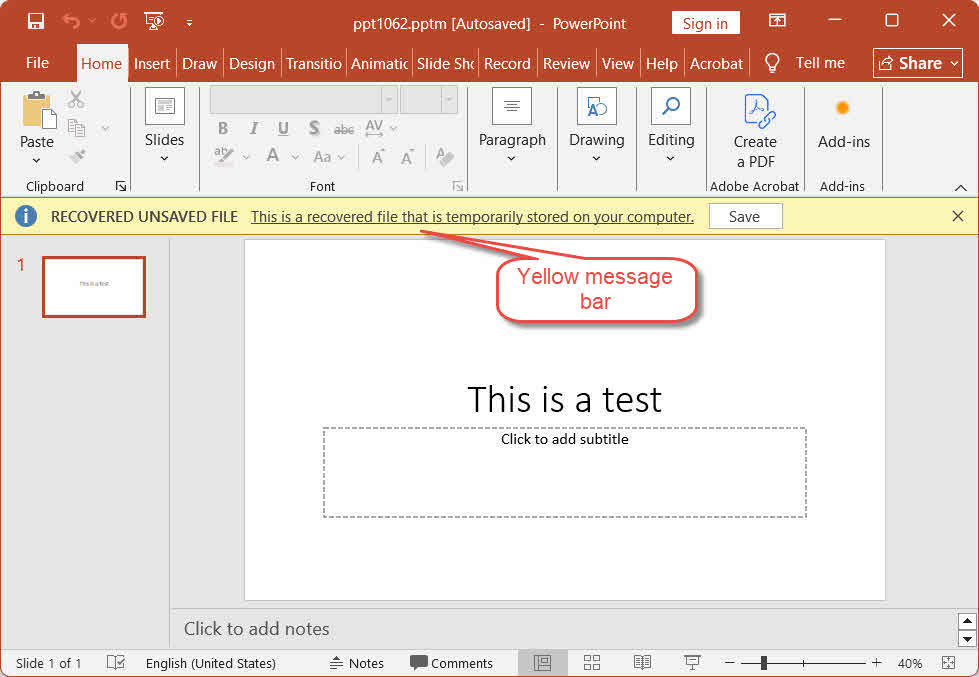
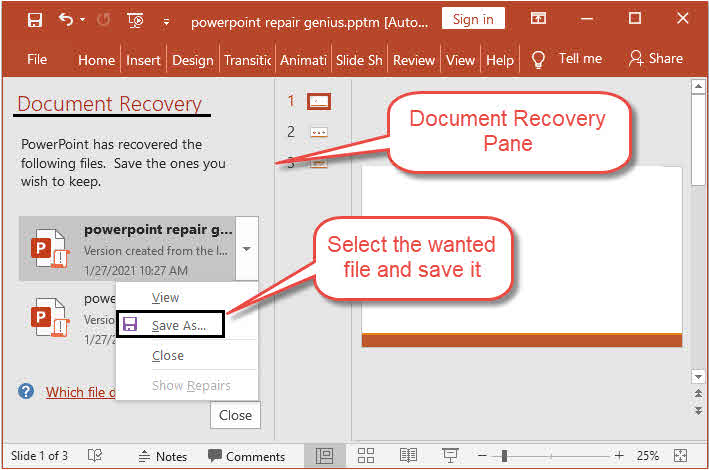
Note: In PowerPoint 2021 and earlier, recovered files appear in the Document Recovery pane on the left instead of opening individually with a yellow bar. Click the file name in the pane to open it, then save.
4. Method 2: Recover Unsaved PowerPoint Files via File > Open
Use this method when no yellow bar or Document Recovery pane appears on startup:
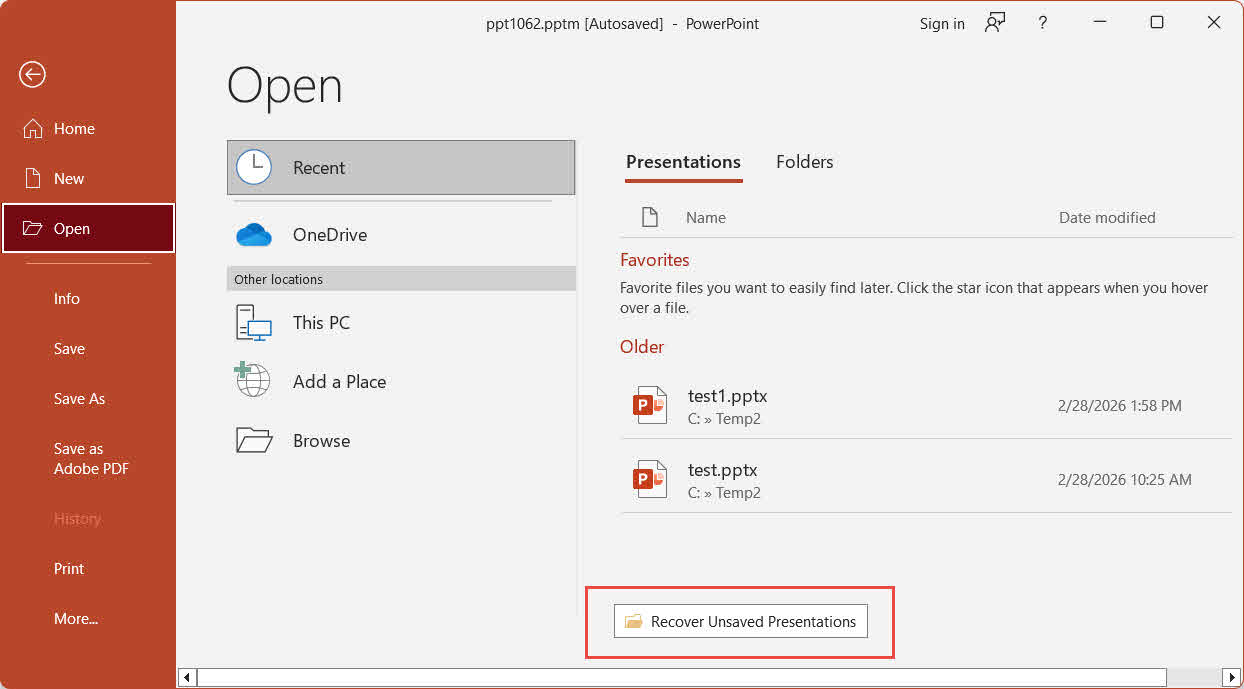
- Start PowerPoint and click File -> Open -> Recent.
- Scroll to the bottom of the Recent list and click Recover Unsaved Presentations.
- In the Open window, select your file and click Open.
- Immediately save the recovered file using File -> Save As.
5. Method 3: Recover Unsaved PowerPoint Files via File > Info
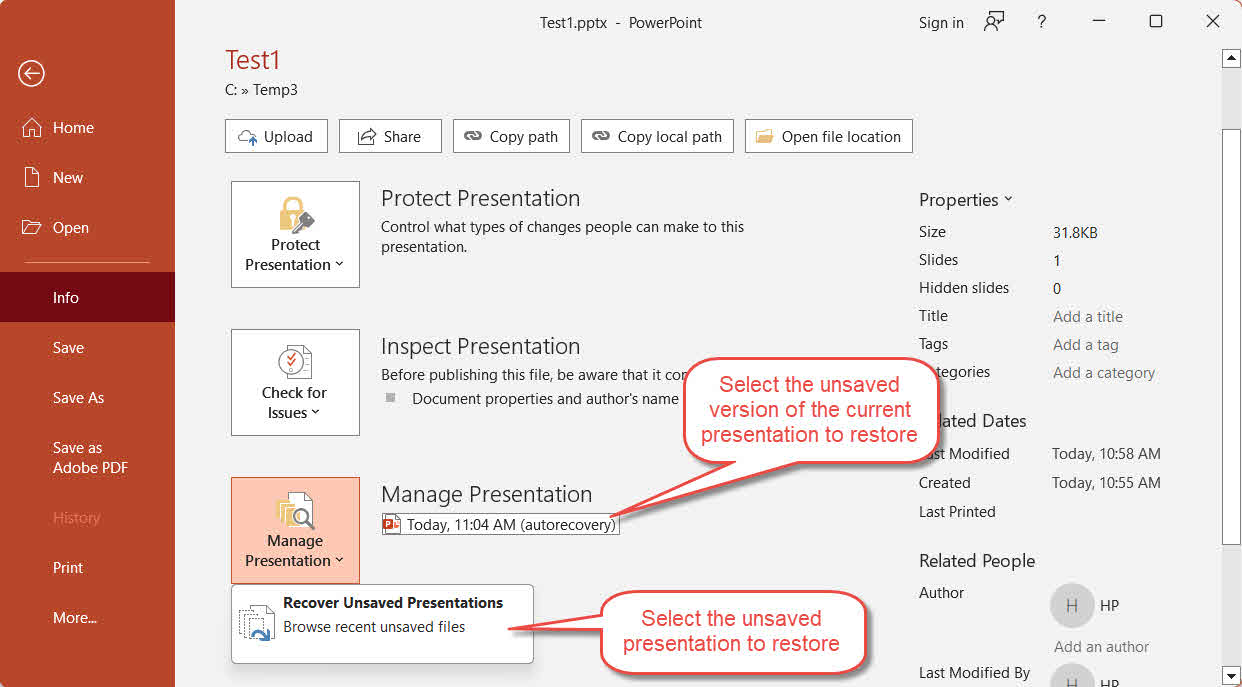
This is a more advanced method, which can recover both unsaved presentations and unsaved versions of the currently open presentation, including the unsaved version of the previous session:
- Start PowerPoint and open a presentation whose unsaved version you want to recover, or create a new one. (The Info tab only appears when there is an active file.)
- Go to File -> Info -> Manage Presentation.
- Click the Manage Presentation button and select Recover Unsaved Presentations from the dropdown menu.
- Select your file and click Open.
- Other than this, beside the Manage Presentation button, you can see a list of timestamped AutoRecover versions of the currently open presentation, including any version labeled when I closed without saving from the previous session. Click the version you want to recover.
- Immediately save the recovered file using File -> Save As.
6. Method 4: Search for AutoRecover Files Manually
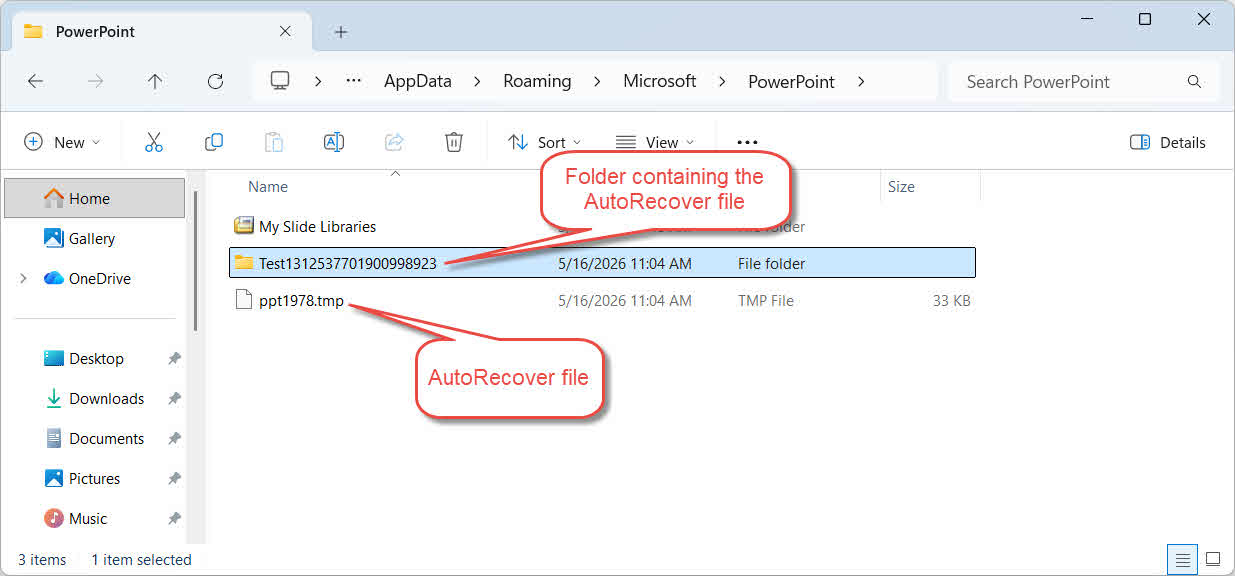
If Methods 1–3 do not recover your wanted file, search the AutoRecover folder directly. PowerPoint saves AutoRecover data to this folder automatically during an editing session.
For Windows:
- Press Windows + R, type %AppData%\Microsoft\PowerPoint\ and press Enter.
- Sort files by Date Modified to bring the newest files to the top.
- Identify candidate *.tmp, *.ppt, and *.pptx files, then make a copy of each before opening.
- For a *.tmp file, start PowerPoint, go to File -> Open -> Browse, change the file type dropdown to All Files, and open it. If that fails, change its extension to .pptx and try again.
- Immediately save the recovered file with File -> Save As.
For Mac:
- Open Finder -> Go -> Go to Folder.
- Type the following path and press Enter:
/Users/<username>/Library/Containers/Microsoft PowerPoint/Data/Library/Preferences/AutoRecovery
where <username> is your actual user name.
- Look for files named AutoRecovery save of [filename] and open any found file with Microsoft PowerPoint.
- Save immediately with File -> Save As.
7. Method 5: Search the UnsavedFiles Cache Folder
PowerPoint maintains a dedicated UnsavedFiles cache folder that may contain recoverable copies of recent unsaved presentations:
- Press Windows + R, type %LocalAppData%\Microsoft\Office\UnsavedFiles and press Enter.
- Sort files by Date Modified to bring the newest files to the top.
- Identify candidate *.tmp, *.ppt, and *.pptx files, then make a copy of each before opening.
- For a *.tmp file, start PowerPoint, go to File -> Open -> Browse, change the file type dropdown to All Files, and open it. If that fails, change its extension to .pptx and try again.
- Immediately save with File -> Save As.
8. Method 6: Search for Temporary Files
PowerPoint and Windows create temporary files during an active editing session, which can help to recover unsaved PowerPoint presentations:
For Windows:
- Press Windows + R, type %temp%, and press Enter.
- In the File Explorer search box, search for
*.tmp,*.ppt, and*.pptxfiles, or files starting with ~, ~$, or $. Sort results by Date Modified. - Look for candidate files with a size greater than 0 KB created during your work session, then make a copy of each.
- For files whose extension is not .ppt or .pptx, change the file extension to .pptx.
- Open the file in PowerPoint.
- Immediately save with File -> Save As.
Note: Also check the folder where the original file was saved for files beginning with ~, ~$, or $ — PowerPoint creates these during an active session and they may contain recoverable content. In the File Explorer search box, enter the following filters:
- Files starting with ~:
System.FileName:~<"~" - Files starting with ~$:
System.FileName:~<"~$" - Files starting with $:
System.FileName:~<"$"
For Mac:
- Open Terminal via Spotlight (Command + Space, type Terminal, press Enter).
- Type open $TMPDIR and press Enter. A Finder window opens at the system temp folder.
- Navigate to the TemporaryItems folder and look for PowerPoint-related files, such as files ending in .tmp or names beginning with ~PowerPoint.
- Open any promising file to verify its contents.
- Save a permanent copy immediately with File -> Save As.
9. Method 7: Recover from Outlook Temporary Internet Cache (Email Attachments)
If you opened a PowerPoint file directly from an Outlook email attachment and worked on it without saving to a permanent location, a temporary copy may remain in Outlook’s content cache folder:
- Press Windows + R, type %LocalAppData%\Microsoft\Windows\INetCache\Content.Outlook\ and press Enter.
- Sort by Date Modified and look for your file.
- Make a copy, change its extension to .pptx if needed, and open it in PowerPoint.
- Save immediately with File -> Save As to a permanent location.
10. Method 8: Search the Whole Computer
Instead of checking individual folders, you can also search the entire computer for candidate PowerPoint presentations or temporary files created during your work session:
- Open File Explorer and click This PC in the left panel to search across all drives.
- In the search box, type
*.ppt OR *.pptx OR *.tmpand press Enter. - After results appear, sort them by Date modified to bring the most recent files to the top.
- Copy any promising file to a separate folder before opening it. Do not open PowerPoint during this step, as launching PowerPoint may clear the AutoRecover folder.
- For .tmp files, change the extension to .pptx before opening.
- Open the file in PowerPoint. If successful, save immediately with File -> Save As.
If the above search does not find the wanted file, try searching for PowerPoint temporary files beginning with ~, ~$, or $. In the search box, enter the following filters:
- Files starting with ~:
System.FileName:~<"~" - Files starting with ~$:
System.FileName:~<"~$" - Files starting with $:
System.FileName:~<"$"
11. Method 9: Recover from AutoSave
AutoSave is another feature that can help to recover unsaved PowerPoint presentations. It is completely different from AutoRecover, though people always confuse them.
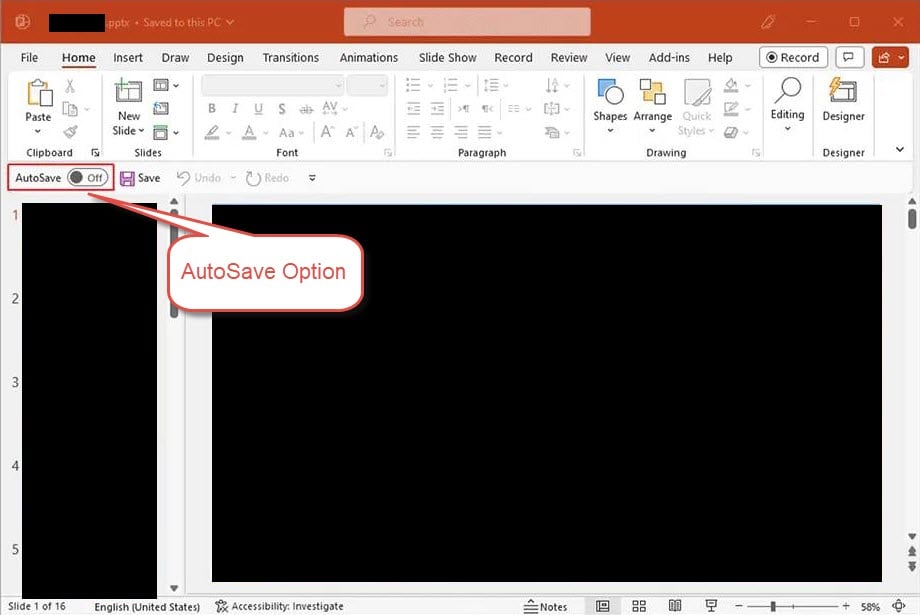
AutoSave is only available in PowerPoint for Microsoft 365, and only for files stored on OneDrive, OneDrive for Business, or SharePoint Online. When active, it syncs every change to the cloud continuously, making it possible to restore to any point in your editing history.
- Open the file in PowerPoint.
- Click the file name in the top title bar.
- In the popup menu, click Version History.
- The Version History panel opens on the right, listing all versions with timestamps. Browse to find the version you need.
- Click the version to preview it.
- Click Restore in the information bar to restore that version.
Note: If the AutoSave toggle in the top-left corner of PowerPoint is off, AutoSave is not active for that file. Saving the file to OneDrive and turning on the toggle will enable it going forward.
12. Method 10: Restore a Previous Version
If the file is stored in a location that supports versioning, you can restore a previous version directly without relying on PowerPoint built-in features:
- Windows File History
- macOS Time Machine
- Google Drive Version History
- OneDrive Version History
- SharePoint Version History
- Dropbox Version History
13. Method 11: Recover from Recycle Bin (Windows / Mac / Cloud)
Always check the Recycle Bin before concluding a file is gone:
- Windows Recycle Bin
- macOS Trash
- OneDrive Recycle Bin
- SharePoint Recycle Bin
- Google Drive Trash
- Dropbox Deleted Files
- iCloud Drive Recently Deleted
14. Method 12: Use Professional File Recovery Software
If all the above methods fail, professional file recovery software can scan your drive and recover unsaved PowerPoint files:
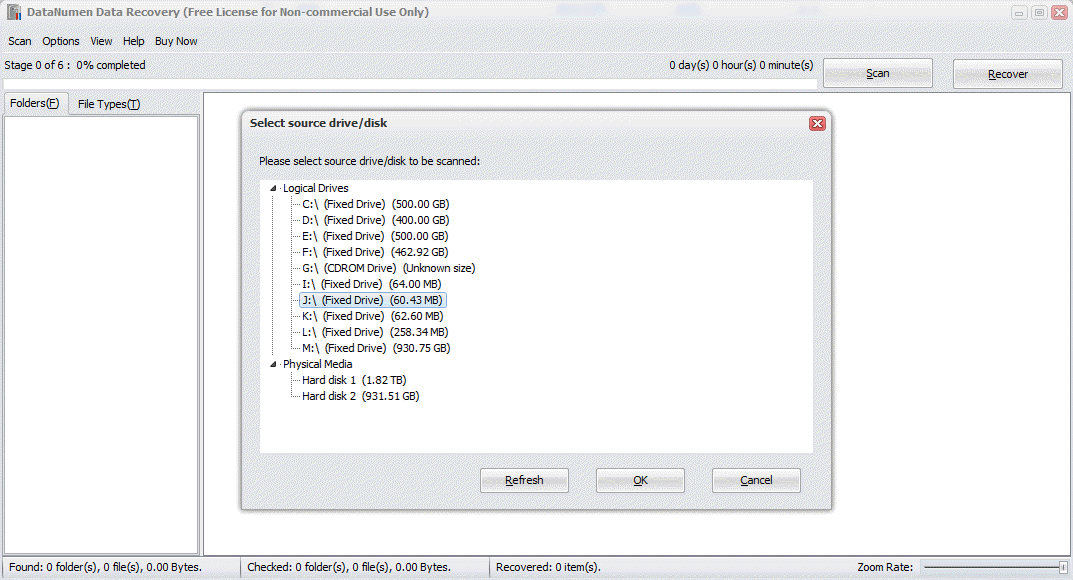
- Download and install DataNumen Data Recovery.
- Select the drive to scan.

- Click the File Type tab in the left panel.
- Select Presentation Files to filter all presentation files. Or more specifically, select MS PowerPoint PPTX files.
- Check the potential candidate files in the right search results:

- Click the Recover button to save recovered files to a different drive to avoid overwriting data.

15. Repair Corrupt Recovered PowerPoint Files
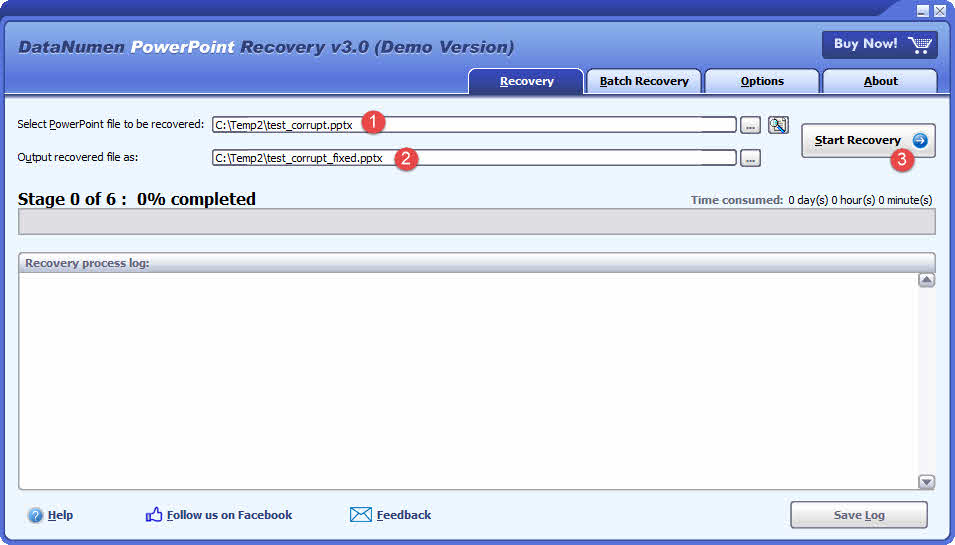
From time to time, unsaved files recovered from crash states, AutoRecover folders, temp folders, or data recovery scans may be corrupt and will not open in PowerPoint properly. In such a case, DataNumen PowerPoint Recovery can repair corrupt PowerPoint PPTX files and output a fixed file:
- Close PowerPoint and other applications that may change your source PowerPoint file.
- Start DataNumen PowerPoint Recovery
- Select the corrupt PowerPoint file to be repaired.
- Set the output file name.
- Click Start Recovery. The tool will start to scan and recover the file.
- Once the repair is complete, open the recovered file in PowerPoint and review the content.
16. How to Prevent Future Loss
To prevent losing unsaved presentations in the future, apply the following measures:
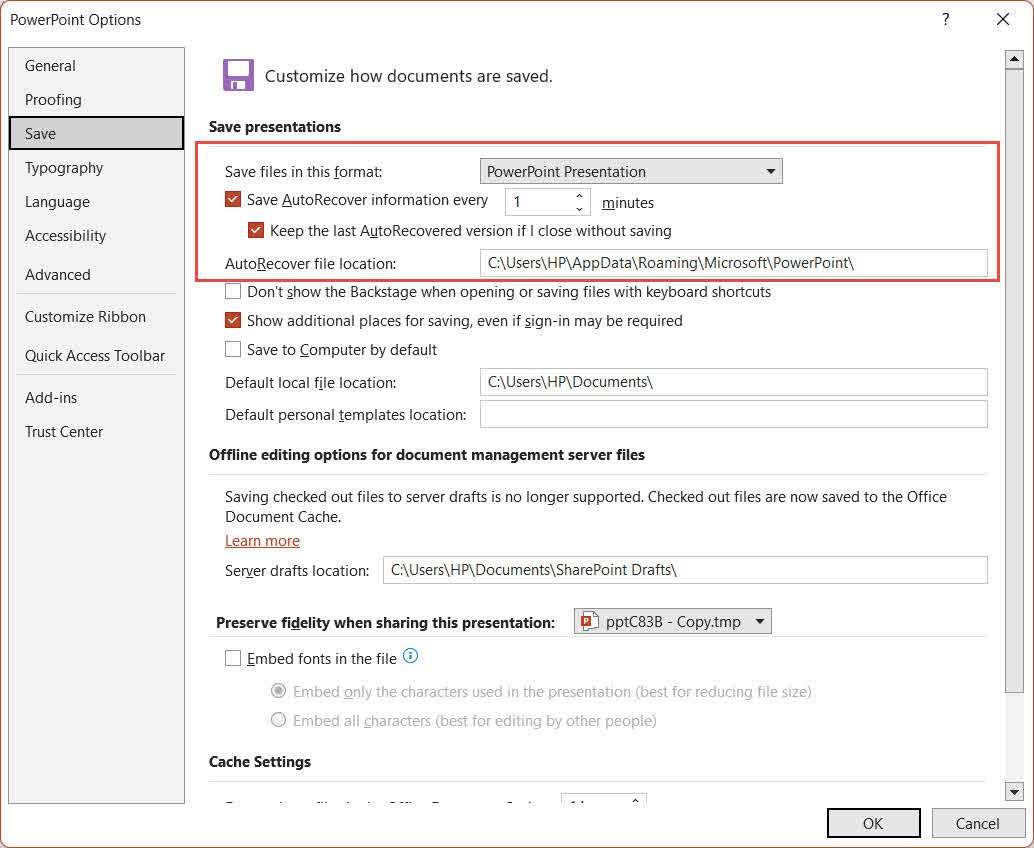
- Enable AutoRecover and shorten the interval. In PowerPoint, go to File -> Options -> Save. Check Save AutoRecover information every ## minutes and reduce the interval from the default 10 to 1–2 minutes. Also check Keep the last AutoRecovered version if I close without saving.

- Save locally before opening email attachments. When you open a PowerPoint directly from Outlook, save it to a permanent local file immediately and make edits on the local file thereafter.
- Adopt a 3-2-1 backup strategy. Keep 3 copies of critical files on 2 different media types, with 1 copy stored offsite or in the cloud.
- Keep a local backup alongside OneDrive. Some users have reported data loss caused by OneDrive sync conflicts. Maintain a local copy of critical files in addition to cloud storage.
17. Frequently Asked Questions
Q: Can I recover a PowerPoint file I never saved at all?
A: Yes, in many cases. If AutoRecover was enabled, PowerPoint saves drafts of new presentations to %AppData%\Microsoft\PowerPoint\ and %LocalAppData%\Microsoft\Office\UnsavedFiles. Use Methods 1–5 to check these locations. If no draft exists on disk, third-party recovery software (Method 12) is the last option.
Q: How long does PowerPoint keep AutoRecover files?
A: PowerPoint deletes AutoRecover files when a presentation is closed normally, whether saved or deliberately discarded. After a crash, it retains them until you restart PowerPoint and accept or dismiss the recovery prompt. Dismissed files go to the Recycle Bin, not permanent deletion.
Q: Where are AutoRecover files stored on Windows?
A: The default location is %AppData%\Microsoft\PowerPoint\. Presentations closed without saving may also appear in %LocalAppData%\Microsoft\Office\UnsavedFiles.
Q: Where are AutoRecover files stored on Mac?
A: ~/Library/Containers/com.Microsoft.Powerpoint/Data/Library/Preferences/AutoRecovery/. Use Finder -> Go -> Go to Folder to navigate there, as the Library folder is hidden by default.
Q: What is the difference between AutoSave and AutoRecover in PowerPoint?
A: AutoRecover saves a temporary local copy at a set interval (default 10 minutes) and works for all files regardless of where they are stored. AutoSave is a Microsoft 365-only feature that syncs every change continuously to OneDrive or SharePoint; it does not work for locally stored files.
Q: How do I retrieve an unsaved PowerPoint file after a crash?
A: Reopen PowerPoint. In Microsoft 365, recovered presentations open automatically with a yellow message bar—click Save immediately. In PowerPoint 2021 and earlier, the Document Recovery pane appears on the left. Click the file in the pane to open it, then save.
Q: Can I find an unsaved PowerPoint file after restarting my computer?
A: Possibly. AutoRecover files in %AppData%\Microsoft\PowerPoint\ survive a reboot if PowerPoint crashed rather than closed normally. Temporary files in %temp% are less likely to survive a restart. Check the AutoRecover folder first.
Q: What if I accidentally clicked “Don’t Save” in PowerPoint?
A: Check %LocalAppData%\Microsoft\Office\UnsavedFiles immediately—PowerPoint may have written a draft there. Also try File -> Open -> Recent -> Recover Unsaved Presentations at the bottom of the list. If you dismissed a recovery prompt, check the Recycle Bin—PowerPoint moves dismissed recovery files there rather than deleting them permanently.
Q: I opened a PowerPoint from an email and didn’t save it — can I recover it?
A: Possibly. Check %LocalAppData%\Microsoft\Windows\INetCache\Content.Outlook\ for a temporary copy left by Outlook. See Method 7 for the full steps.
Q: Can third-party software restore a PowerPoint file that was never saved?
A: It is unlikely but possible. Third-party tools scan for file fragments not yet overwritten on disk. Success depends on whether AutoRecover wrote any data to disk during your session and how quickly you run the scan after the loss.
18. Conclusion
To recover unsaved PowerPoint files, start with the fastest built-in options: the yellow message bar on startup (Method 1), Recover Unsaved Presentations via File -> Open or File -> Info (Methods 2–3), and the AutoRecover folder (Method 4). If those fail, check the UnsavedFiles cache (Method 5), temporary files (Method 6), the Outlook cache for email attachments (Method 7), and a full computer search (Method 8). For presentations on OneDrive or SharePoint, use AutoSave version history and cloud recycle bins (Methods 9–11). As a last resort, DataNumen Data Recovery (Method 12) can retrieve files when other methods fail. If a recovered file is corrupt and will not open, DataNumen PowerPoint Recovery can fix it.
Going forward, enable AutoRecover and reduce the interval to 1–2 minutes, save attachment to a local file and edit the local version, and follow a 3-2-1 backup strategy. These measures together prevent most unsaved presentation scenarios before they occur.
About the Author
Shou Sheng is a Microsoft Office specialist with over 10 years of hands-on experience in Word, Excel, and PowerPoint troubleshooting across enterprise and educational environments. He has helped thousands of users recover lost work, resolve file corruption issues, and optimize their Office workflows.
Through his technical writing, Shou is committed to translating complex Office troubleshooting into clear, actionable steps for users of all skill levels. He keeps up with the latest developments in Microsoft 365 and continuously tests methods against real-world file corruption scenarios to ensure accuracy.
Have questions about this guide or need additional help with Office issues? Shou welcomes feedback and suggestions for improving these troubleshooting resources.